Minneapolis-based journalist
photo essay

‘I’m not going. This is my home’: An Afghan family builds a new life in Minnesota amid rising uncertainty
By Anna Adamson
Dec. 10, 2025
Naser Mohammadi was completing a masters degree in international relations in February 2020 when the U.S. signed a deal with the Taliban to end the nearly two-decade war in Afghanistan.
The deal would leave the power in the hands of the Taliban, threatening not only the U.S.-backed government of Afghanistan, but also, the improved opportunities for women and minorities— opportunities made possible by international aid and people like Naser.
Naser’s career in non-profit project management included working for the U.S. Agency for International Development’s $38 million project, ‘Promote: Women in Government’, which sought to increase and advance the number of women employed in the Afghan government.
His association with USAID and American contractors would have made him a target of Taliban retaliation if he stayed in the country.
Naser first applied for a Special Immigrant Visa in 2018, but slow processing times meant that less than 50% of allocated visas were issued to eligible Afghans between 2018-2020. Naser and his family were still in the country when the situation unfolded in the summer of 2021— culminating in the fall of Kabul to Taliban forces on August 15, just two weeks before U.S. troops would officially withdraw. That’s when Naser got an email from the U.S. embassy.
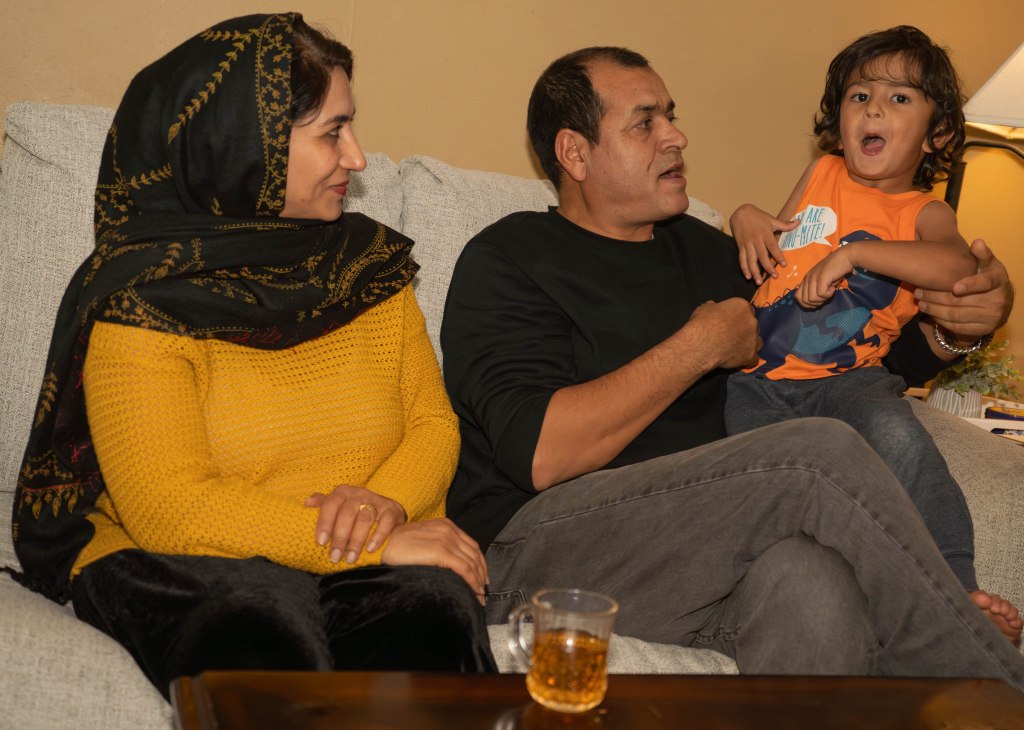
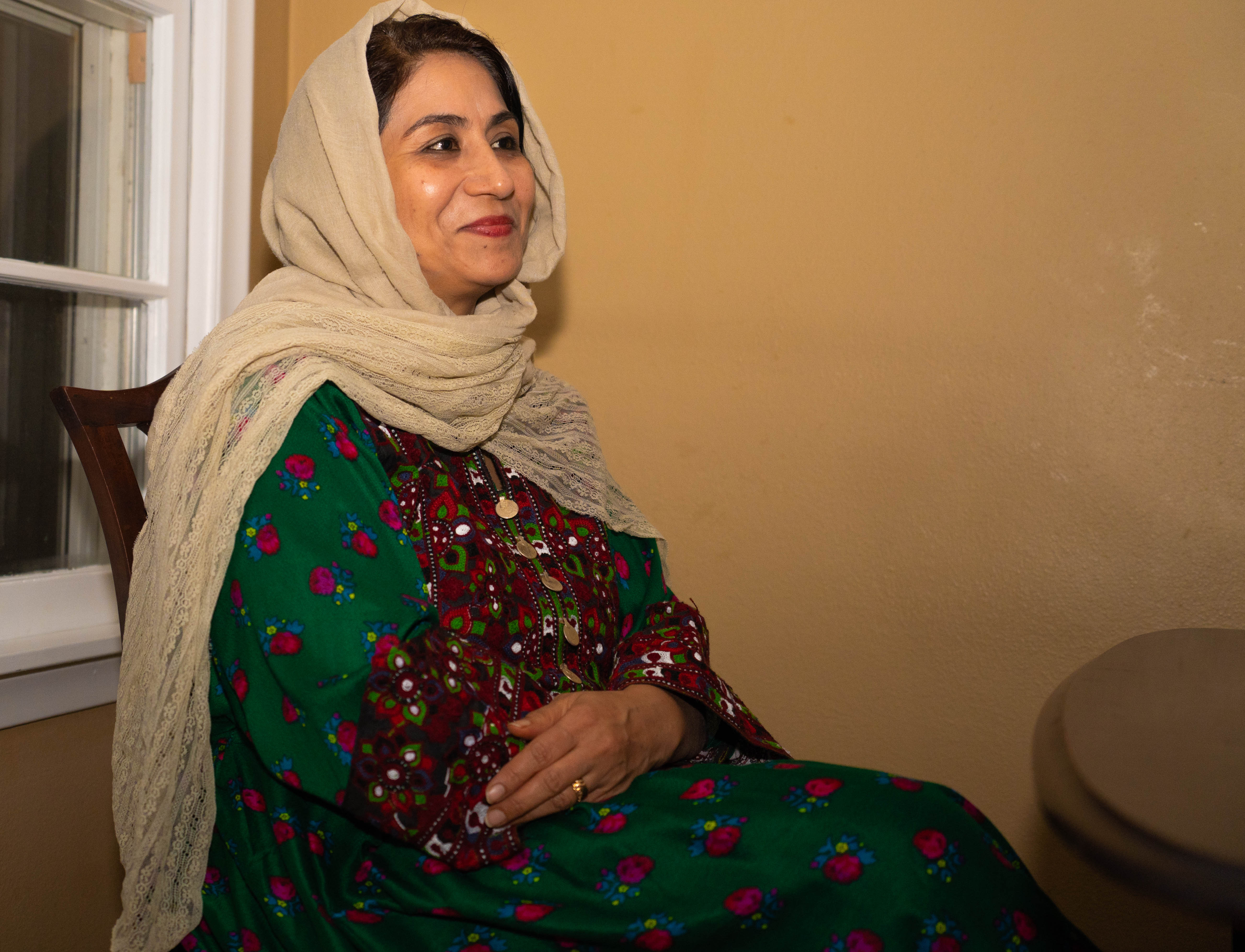
“They said ‘come to this gate, we are gonna take you out of the country,’” Naser said. At the time, his wife, Farzana, was pregnant with their fourth child.
A group of Naser’s former colleagues coordinated a bus filled with journalists, media workers and Naser’s family to the Kabul airport, where they boarded one of the crowded evacuation flights.
The Mohammadi family was among the 74,190 Afghans resettled to the U.S. under Operation Allies Welcome (OAW), an initiative led by the Department of Homeland Security. The evacuees had varying immigration statuses, including humanitarian parole and Special Immigration Visas. Naser now has a green card.
In Minnesota, Naser has continued working in the nonprofit sector, where he serves Minnesota’s Afghan community— now estimated to be upwards of 1,000 people. He works as a lead social services navigator at the Afghan Cultural Society in Minneapolis.
“This country gave us safety, security, chances to study, to work, to survive,” Naser said.
But for some, that security is under threat. The recent crackdown on legal immigration from Afghanistan has sent a wave of uncertainty among the Afghan community nationwide. Following the recent shooting of two National Guard members, U.S. Citizenship and Immigration Services halted processing of all immigration requests relating to Afghan nationals indefinitely.
“The protection and safety of our homeland and of the American people remains our singular focus and mission,” USCIS said in a statement.
That meant pausing all asylum decisions and halting the Special Immigrant Visa program for Afghans who assisted the U.S. war effort. The USCIS also announced it will conduct a “full scale, rigorous reexamination” of green card holders —like Naser— from countries “of concern.” Green cards are typically considered to be a more permanent citizenship status.
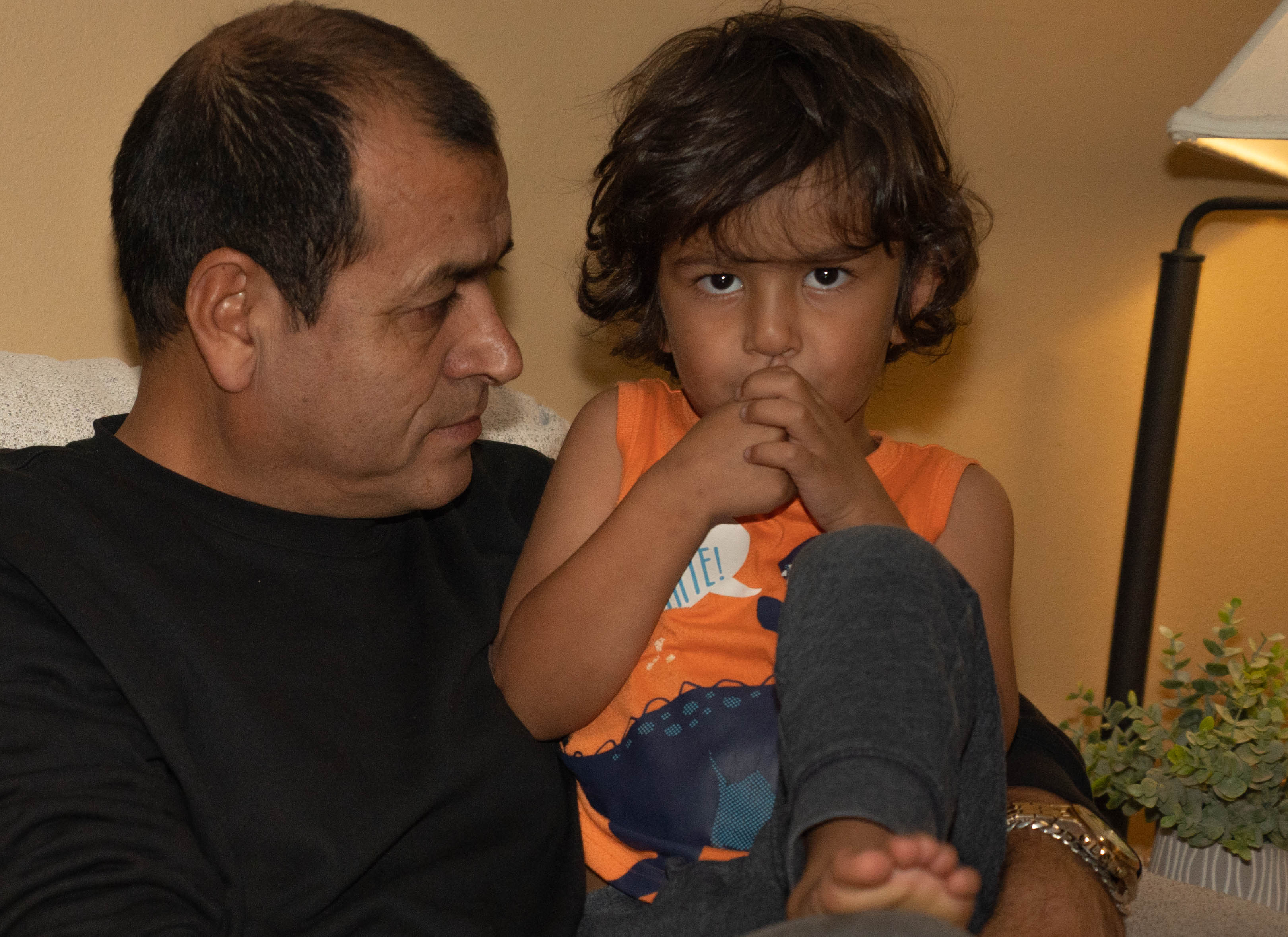
“I will not be able to go back [to Afghanistan], and I’m not going, this is my home,” Naser said. Naser and Farzana have four sons: Mesbah (16), Masihullah (11), Mesaq (6) and Miran (3); the older three were born in Afghanistan.
“So I have to use this chance— for my kids’ education and for myself as well.”

 Anna Adamson